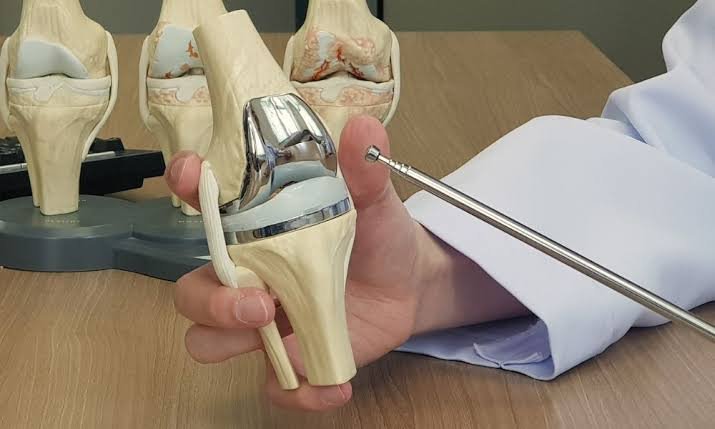
Doctors may recommend non-surgical treatment before considering knee replacement for many patients. Moreover, treatment can include physiotherapy, strengthening exercises, weight management when appropriate, activity modification, and medicines prescribed by a healthcare professional. Therefore, patients should discuss persistent symptoms with an orthopedic specialist before deciding on surgery. In addition, your response to conservative care can help your doctor understand how significantly the condition affects your function. As a result, you can avoid unnecessary surgery when appropriate non-surgical care provides satisfactory improvement.
Knee replacement can involve different approaches depending on the condition of the joint. Moreover, the surgeon may consider whether damage affects one compartment or several areas of the knee. Therefore, some patients may qualify for partial knee replacement, while others may require total knee replacement. In addition, your age, activity level, joint condition, alignment, and overall health can influence the treatment decision. As a result, your orthopedic surgeon can recommend the most suitable option after a detailed evaluation.
Total knee replacement addresses significant damage across the knee joint. Moreover, the surgeon replaces the damaged joint surfaces with artificial components. Therefore, this approach can suit selected patients with advanced and widespread joint degeneration. In addition, rehabilitation plays an important role after surgery. As a result, patients can gradually work toward improved movement and everyday function.
Partial knee replacement focuses on a specific damaged compartment of the knee. Moreover, not every patient qualifies for this procedure. Therefore, your surgeon must evaluate the location and extent of joint damage before recommending it. In addition, your overall knee stability and joint condition can influence eligibility. As a result, a detailed assessment remains essential before choosing partial replacement.
Proper preparation can support a smoother surgical journey. Moreover, your medical team may review your health history, medications, investigations, and physical condition before surgery. Therefore, follow every instruction provided by your healthcare team. In addition, preparing your home, arranging assistance, and understanding your rehabilitation plan can make the early recovery period easier. As a result, you can approach surgery with better preparation and realistic expectations.
During knee replacement surgery, the orthopedic surgeon removes damaged joint surfaces and places suitable artificial components. Moreover, the surgeon selects the implant and surgical technique according to the patient’s knee condition and treatment plan. Therefore, each procedure requires individualized planning. In addition, the surgical team monitors the patient throughout the procedure and provides appropriate postoperative care. As a result, the patient can begin the planned recovery process after surgery.
Recovery develops gradually and differs between patients. Moreover, your age, general health, muscle strength, surgical procedure, and rehabilitation program can influence your progress. Therefore, follow your surgeon’s instructions regarding movement, wound care, walking, exercise, and follow-up visits. In addition, physiotherapy can help improve knee mobility and strength. As a result, consistent rehabilitation can support your return to everyday activities.
Physiotherapy forms an important part of recovery after knee replacement. Moreover, structured exercises can help improve knee movement, muscle strength, balance, and walking ability. Therefore, patients should follow the rehabilitation plan provided by their healthcare team. In addition, physiotherapists can gradually adjust exercises according to recovery progress. As a result, consistent rehabilitation can help patients build confidence and regain functional movement.
Patients usually return to daily activities gradually after knee replacement. Moreover, your recovery plan should match your individual progress rather than a fixed timeline. Therefore, follow professional guidance before increasing walking distance, climbing stairs, driving, or exercising. In addition, regular rehabilitation can help improve strength and movement. As a result, you can gradually resume suitable activities with greater confidence.