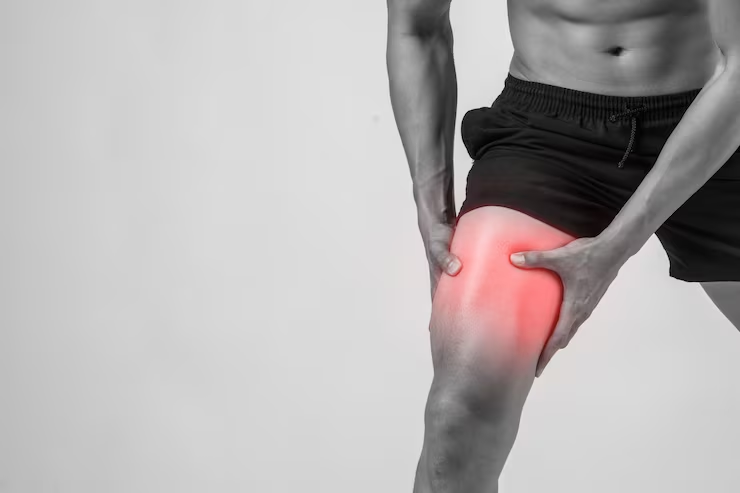
The meniscus helps distribute pressure within the knee and supports smooth joint movement. Moreover, twisting movements during sports or accidents can cause meniscus tears. Therefore, symptoms such as joint-line pain, swelling, catching, or locking should receive professional attention. In addition, treatment can involve rehabilitation or arthroscopic management depending on the tear and the patient’s individual circumstances. As a result, proper assessment helps your specialist choose an appropriate treatment strategy.
Ligaments help maintain knee stability during movement. Moreover, sudden twisting, sports injuries, falls, and collisions can damage these structures. Therefore, instability, swelling, pain, or difficulty putting weight on the leg can indicate a ligament injury. In addition, treatment depends on the affected ligament, injury severity, activity level, and associated damage. As a result, an orthopedic assessment can help establish a suitable recovery plan.
Athletes place repeated demands on their knees during running, jumping, landing, and quick direction changes. Moreover, these activities can increase the risk of ACL injuries, meniscus tears, cartilage problems, and other conditions. Therefore, athletes should not ignore recurring knee pain or instability. In addition, sports injury rehabilitation can focus on strength, flexibility, balance, coordination, and movement control. As a result, structured care can support a gradual return to appropriate sporting activities.
Knee arthroscopy uses a small camera and specialized instruments to examine and treat selected problems inside the knee. Moreover, surgeons may use this technique for certain meniscus, cartilage, ligament, and other joint conditions. Therefore, not every knee problem requires arthroscopy. In addition, your orthopedic specialist should evaluate your symptoms and diagnostic findings before recommending a procedure. As a result, patients can understand whether arthroscopic treatment suits their specific condition.
Many knee problems do not require immediate surgery. Moreover, conservative treatment can help selected patients manage symptoms and improve function. However, some conditions may require surgical evaluation when significant structural damage, persistent instability, severe symptoms, or functional limitations continue. Therefore, your doctor should review your examination and imaging before recommending surgery. In addition, your activity level, age, general health, and personal goals can influence treatment decisions. As a result, you can choose a treatment approach based on your individual needs.
Advanced knee arthritis can sometimes cause severe pain and significant difficulty with everyday activities. Moreover, knee replacement may become an option for selected patients when other appropriate treatments no longer provide adequate relief. Therefore, an orthopedic surgeon should evaluate your symptoms, joint condition, mobility, and overall health before recommending surgery. In addition, rehabilitation after knee replacement plays an important role in restoring movement and strength. As a result, a personalized recovery program can support your return to daily activities.
Recovery depends on the type of knee procedure, injury severity, overall health, and rehabilitation progress. Moreover, patients may need a gradual approach to regain movement and strength. Therefore, your orthopedic team can create a recovery plan that matches your procedure and physical condition. In addition, physiotherapy may focus on reducing stiffness, improving strength, restoring balance, and developing functional movement. As a result, following professional instructions can support steady recovery.
Knee discomfort can become more common with age because joints and surrounding tissues experience gradual changes. Moreover, arthritis and previous injuries can contribute to pain and stiffness. Therefore, you should not automatically consider persistent knee pain a normal part of aging. In addition, an orthopedic assessment can identify potentially treatable conditions and suitable management options. As a result, timely care can help older adults maintain mobility and independence.
Regular exercise supports overall health, but excessive training or sudden changes in activity can place additional stress on the knee. Moreover, poor technique, inadequate recovery, and previous injuries can contribute to recurring symptoms. Therefore, athletes and fitness enthusiasts should address persistent pain instead of repeatedly training through it. In addition, strength training and movement-focused rehabilitation can improve knee function in appropriate cases. As a result, balanced training can support long-term activity and performance.
Healthy movement habits can help support knee function. Moreover, regular strength and flexibility exercises can improve support around the joint. Therefore, increase exercise intensity gradually and use proper technique during workouts. In addition, allow adequate recovery between demanding sessions and choose suitable footwear for your activities. As a result, sensible training habits can reduce unnecessary stress on the knees.