Selecting the Best ACL Doctor In Chhindwara involves more than looking for a doctor who performs ACL surgery. Therefore, consider the specialist’s orthopedic expertise, approach to diagnosis, surgical planning, rehabilitation guidance, and experience with sports-related knee injuries. In addition, a good consultation should give you an opportunity to understand your diagnosis and treatment choices. However, no single treatment suits every patient. As a result, choose a specialist who develops care around your individual knee condition and recovery goals.
A personalized consultation allows your orthopedic specialist to understand your injury in detail. Therefore, your appointment may include a discussion about how the injury occurred, your current symptoms, previous treatments, and physical activities. In addition, the doctor may examine knee stability, movement, strength, and swelling. However, your specialist may request additional imaging when necessary. As a result, the consultation can provide a clearer understanding of your injury and suitable treatment options.
Proper preparation can make the surgical journey more organized and comfortable. Therefore, your orthopedic team may provide instructions about medications, investigations, physical activity, and preoperative requirements. In addition, improving knee movement and muscle strength before surgery may support rehabilitation when your doctor recommends prehabilitation. However, every patient receives different instructions depending on their condition. As a result, follow your medical team’s guidance carefully before the procedure.
Recovery after ACL treatment depends on the injury, treatment method, physical condition, and rehabilitation progress. Therefore, patients usually follow a gradual plan that focuses on movement, strength, balance, and functional control. In addition, physiotherapy can help restore knee stability and prepare patients for daily activities or sports. However, recovery does not follow the same timeline for everyone. As a result, your orthopedic specialist and physiotherapist should guide each stage of your rehabilitation.
Rehabilitation plays a major role in recovery after ACL reconstruction. Therefore, physiotherapy can focus on reducing stiffness, improving knee movement, rebuilding muscle strength, and developing balance. In addition, later rehabilitation stages may include functional exercises and sport-specific training for appropriate patients. However, progressing too quickly can place unnecessary stress on healing tissues. As a result, follow your physiotherapist’s progression plan and your surgeon’s activity recommendations.
Athletes often need extensive rehabilitation before returning to competitive sports after ACL reconstruction. Therefore, recovery programs may gradually develop strength, coordination, balance, agility, and confidence. In addition, functional testing can help your medical team assess readiness for higher-level activities. However, feeling better does not automatically mean that the knee has regained sufficient strength and control. As a result, return to sports should follow professional clearance and a structured rehabilitation plan.
Preventive training can help athletes improve movement control and reduce injury risk. Therefore, warm-ups, strength exercises, balance training, landing techniques, and sport-specific conditioning can support better knee mechanics. In addition, coaches and physiotherapists can teach athletes how to control sudden movements and changes in direction. However, no prevention program can eliminate every injury risk. As a result, consistent training and proper technique can contribute to healthier movement patterns.
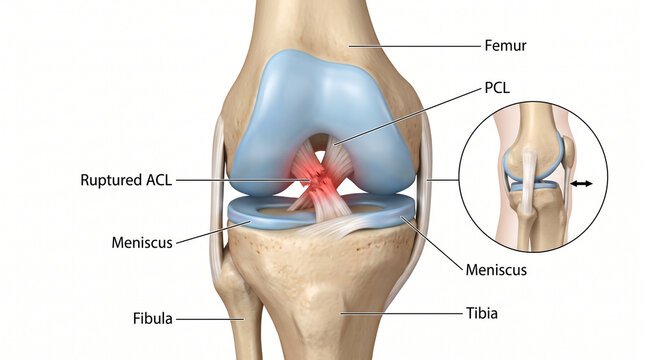
ACL injuries can occur alongside meniscus damage or other knee problems. Therefore, your orthopedic specialist may evaluate the entire knee rather than focusing only on the ACL. In addition, MRI findings can help identify associated structural injuries when appropriate. However, treatment depends on the location and severity of each injury. As a result, comprehensive diagnosis can help your doctor develop a treatment plan that addresses the overall condition of your knee.
Every medical treatment involves potential risks and limitations. Therefore, your orthopedic specialist should explain the possible benefits, risks, alternatives, and expected recovery before recommending ACL surgery. In addition, you should discuss your medications, allergies, previous surgeries, and relevant medical history with your healthcare team. However, individual risks can vary according to the procedure and personal health factors. As a result, an informed consultation can help you make a confident treatment decision.
An orthopedic specialist can help you understand whether your knee requires conservative treatment or surgical intervention. Therefore, the doctor can assess ligament stability, associated injuries, activity requirements, and recovery goals. In addition, the specialist can explain rehabilitation and expected milestones throughout treatment. However, an ACL diagnosis requires more than simply identifying knee pain. As a result, professional orthopedic assessment can provide a clearer path toward appropriate knee care.