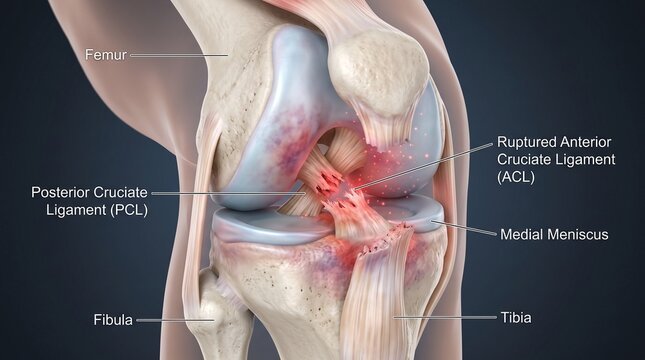
Ligament surgery may become an option when significant instability continues or when the injury affects desired activities. Moreover, some athletes with specific ligament injuries may require reconstruction to support their return to demanding sports. Therefore, your surgeon should consider your symptoms, examination findings, imaging, activity level, and personal goals. In addition, associated meniscus or cartilage injuries can influence the surgical plan. As a result, your specialist can recommend treatment according to your individual condition rather than using a one-size-fits-all approach.
Arthroscopic surgery uses a small camera and specialized instruments to access the knee joint. Moreover, surgeons use arthroscopic techniques for many selected ligament procedures, including ACL reconstruction. Therefore, the exact surgical approach depends on the ligament involved and the patient’s condition. In addition, surgeons can evaluate other structures inside the knee during appropriate arthroscopic procedures. As a result, selected patients can follow a focused surgical and rehabilitation pathway.
The ACL helps control forward movement and rotational stability of the knee. Moreover, an ACL injury can cause instability during running, jumping, or changing direction. Therefore, your orthopedic specialist should evaluate the injury and your activity goals before recommending treatment. In addition, treatment may involve structured rehabilitation or ACL reconstruction for selected patients. As a result, individualized care can help you work toward improved knee stability and functional movement.
The posterior cruciate ligament helps stabilize the knee from the back. Moreover, PCL injuries can occur after direct impact or significant knee trauma. Therefore, treatment depends on the injury’s severity and the stability of the knee. In addition, some patients can benefit from structured rehabilitation, while selected injuries may require surgical evaluation. As a result, a detailed orthopedic assessment can help determine the most suitable treatment pathway.
The medial collateral ligament and lateral collateral ligament help stabilize the sides of the knee. Moreover, sports injuries and direct impacts can damage these ligaments. Therefore, your doctor should assess knee stability and check for associated injuries. In addition, treatment may involve rehabilitation, activity modification, bracing when appropriate, or surgical evaluation for selected injuries. As a result, individualized care can support a gradual return to normal activities.
Athletes often place high demands on their knees through running, jumping, pivoting, and sudden direction changes. Moreover, these movements can increase stress on the knee ligaments. Therefore, athletes should take persistent instability, swelling, or pain seriously. In addition, early evaluation can help identify the injury and establish an appropriate rehabilitation or treatment plan. As a result, athletes can work toward a controlled and gradual return to their chosen activities.
Athletes often want to return to sports as quickly as possible. Moreover, returning too early can increase stress on an injured knee. Therefore, your recovery should progress according to your orthopedic and physiotherapy team’s recommendations. In addition, rehabilitation can gradually address strength, balance, coordination, agility, and sport-specific movement. As a result, a structured recovery plan can help prepare your knee for appropriate physical demands.
Physiotherapy plays an important role in many ligament recovery plans. Moreover, rehabilitation can help restore knee movement, muscle strength, balance, and functional control. Therefore, your physiotherapist can adjust exercises according to your recovery stage. In addition, advanced rehabilitation may include agility, coordination, and activity-specific exercises when appropriate. As a result, consistent rehabilitation can support better knee function and confidence.
Ligament surgery recovery requires patience and consistent rehabilitation. Moreover, recovery can vary according to the procedure, associated injuries, physical condition, and individual progress. Therefore, follow your surgeon’s instructions regarding exercises, weight-bearing, movement, and activity progression. In addition, attend recommended physiotherapy sessions and follow your rehabilitation program consistently. As a result, structured recovery can help you gradually rebuild strength and functional control.
A return to sports requires more than simply feeling comfortable during normal walking. Moreover, demanding sports require adequate strength, stability, balance, coordination, and movement control. Therefore, your rehabilitation team should assess your progress before you resume high-intensity activity. In addition, sport-specific exercises can prepare you for running, jumping, cutting, and other movements. As a result, gradual progression can support a safer return to athletic activities.