Dr Amit Saoji | Orthopedic Surgeon In Nagpur | Orthopedic Doctor in Nagpur

Knee Replacement Surgery In Adilabad – Dr. Amit Saoji Ortho Sports Care
Severe knee pain can gradually affect almost every part of daily life. You may find it difficult to walk, climb stairs, stand for long periods, exercise, or sleep comfortably at night. In many cases, doctors can manage knee problems with medicines, physiotherapy, exercise, weight management, and lifestyle changes. However, when advanced joint damage continues to cause significant pain and disability, Knee Replacement Surgery in Adilabad may become an appropriate treatment option.
Dr. Amit Saoji Ortho Sports Care provides orthopaedic care for patients with knee, shoulder, hip, and sports-related conditions. Dr. Amit Saoji is an orthopaedic, arthroscopy, and sports injury surgeon with a focus on joint-related problems. His approach involves evaluating the underlying condition first and then recommending treatment according to the patient’s individual needs.
What Is Knee Replacement Surgery?
Knee replacement surgery, also known as knee arthroplasty, replaces damaged surfaces of the knee joint with artificial components. Surgeons usually consider this procedure when severe cartilage damage causes ongoing pain, stiffness, and difficulty with normal movement.
During surgery, the surgeon removes damaged portions of the joint and prepares the bone surfaces for the replacement components. The artificial parts then recreate the functional surfaces of the knee.
Importantly, knee replacement does not simply treat the symptom of pain. Instead, it addresses severe structural damage within the joint. As a result, appropriately selected patients may experience less pain and better mobility after completing their rehabilitation.
Knee Replacement Surgeon In Adilabad
Choosing the right orthopaedic surgeon is an important step when considering joint replacement. Before recommending surgery, the surgeon should understand the cause of your knee pain, assess the severity of joint damage, and consider your activity level and overall health.
Dr. Amit Saoji provides evaluation and treatment for various orthopaedic and sports-related conditions, including problems affecting the knee. His clinical focus includes arthroscopy and sports medicine, with treatment decisions based on the patient’s symptoms, examination, imaging, and functional requirements.
Furthermore, surgery is not automatically recommended for every patient with knee pain. A detailed assessment helps determine whether conservative treatment, injections, rehabilitation, or knee replacement may provide the most appropriate solution.
When Is Knee Replacement Surgery Recommended?
Doctors generally consider knee replacement when severe knee damage causes persistent symptoms and other appropriate treatments no longer provide sufficient relief.
A patient may experience:
- Severe or persistent knee pain
- Pain while walking or standing
- Difficulty climbing stairs
- Stiffness after sitting or resting
- Reduced knee movement
- Swelling around the joint
- Night-time knee pain
- Difficulty completing household activities
- Reduced ability to exercise
- Significant limitations at work or during daily activities
However, symptoms alone do not determine whether someone needs surgery. Your doctor also considers X-rays, physical examination findings, joint damage, previous treatment, general health, and personal goals.
Therefore, an orthopaedic consultation can help you understand whether knee replacement is appropriate or whether another treatment may work better.
Common Conditions That May Lead To Knee Replacement
Several conditions can progressively damage the knee joint. Although osteoarthritis is one of the most common causes, other forms of joint damage can also lead to replacement surgery.
Knee Osteoarthritis
Osteoarthritis gradually damages the cartilage that covers the surfaces of the knee joint. As cartilage becomes thinner, the joint may become painful and stiff.
Initially, patients may notice pain after long walks or strenuous activities. Over time, however, symptoms can become more frequent. Some people eventually experience pain during routine activities or while resting.
Rheumatoid Arthritis
Rheumatoid arthritis can cause long-term inflammation within the joints. Over time, this inflammation can damage cartilage, bone, and other joint structures.
Patients with advanced rheumatoid arthritis may experience persistent pain, stiffness, swelling, and reduced knee function. When significant joint destruction occurs, replacement surgery may become one of the treatment options.
Post-Traumatic Arthritis
A previous knee injury can sometimes contribute to arthritis later in life. Fractures, ligament injuries, cartilage damage, and other significant trauma may alter the mechanics of the joint.
As a result, some patients develop progressive pain and stiffness years after the original injury. When the joint becomes severely damaged, an orthopaedic surgeon may discuss knee replacement after evaluating the condition.
Severe Joint Damage
Various conditions can cause advanced deterioration of the knee. When the joint no longer functions normally and pain significantly interferes with everyday activities, replacement surgery may provide an option for suitable patients.
The surgeon determines the appropriate treatment after reviewing the patient’s clinical findings and imaging results.
Types Of Knee Replacement Surgery
Knee replacement does not involve the same procedure for every patient. The surgeon selects the type of replacement according to the location and extent of joint damage.
Total Knee Replacement
Total knee replacement replaces the damaged surfaces of the major areas of the knee joint. Surgeons commonly consider this option when arthritis or other joint damage affects more than one compartment.
The procedure aims to create a stable and functional joint while reducing pain caused by damaged surfaces.
After surgery, rehabilitation helps patients regain knee movement, muscle strength, balance, and confidence while walking.
Partial Knee Replacement
A partial knee replacement treats arthritis that remains limited to a specific compartment of the knee. Because the surgeon preserves healthy parts of the joint, this procedure may suit selected patients.
However, not everyone with knee arthritis qualifies for partial replacement. The surgeon evaluates the condition of the other compartments, ligament function, alignment, symptoms, and imaging before recommending this approach.
Consequently, a detailed assessment remains essential before choosing between partial and total knee replacement.
Symptoms Of Advanced Knee Arthritis
Knee arthritis often develops gradually. At first, symptoms may appear only after prolonged activity. However, advanced disease can eventually interfere with simple daily movements.
Common symptoms include:
- Pain while walking
- Pain when standing from a chair
- Difficulty climbing or descending stairs
- Knee stiffness
- Swelling
- Reduced range of motion
- Pain after prolonged sitting
- Difficulty walking longer distances
- Pain during the night
- Reduced ability to exercise
- Difficulty performing household tasks
In addition, some patients notice grinding or clicking sensations within the knee. Others may change the way they walk to avoid pain.
If these symptoms continue or become progressively worse, an orthopaedic assessment can identify the underlying cause and guide treatment.
Diagnosis Before Knee Replacement
An accurate diagnosis forms the foundation of effective knee treatment. During your consultation, the surgeon will review your symptoms and examine the knee.
The evaluation may include:
- Medical and injury history
- Physical examination
- Knee movement assessment
- Muscle strength evaluation
- Walking and alignment assessment
- X-rays
- Additional imaging when clinically required
- Review of previous treatments
X-rays can help show changes such as narrowing of the joint space, bone changes, and altered alignment. In certain situations, the doctor may recommend additional investigations.
After reviewing the findings, the surgeon can explain the available treatment options and whether knee replacement is appropriate.
Can Knee Replacement Be Avoided?
Not every patient with knee arthritis needs surgery. In fact, doctors often consider non-surgical treatment before recommending knee replacement, particularly when the joint damage is not yet severe.
Depending on the condition, treatment may include:
- Physiotherapy
- Muscle-strengthening exercises
- Activity modification
- Weight management when appropriate
- Pain management
- Walking support when required
- Lifestyle changes
- Other treatments based on the underlying diagnosis
These treatments can help many patients manage symptoms and maintain mobility.
However, when advanced joint damage continues to cause severe pain despite appropriate conservative treatment, knee replacement may become a reasonable option.
How Is Knee Replacement Surgery Performed?
Knee replacement takes place in a hospital or appropriately equipped surgical facility. Before surgery, the medical team completes the required medical and anaesthesia assessments.
During the procedure, the surgeon prepares the damaged portions of the knee and removes the affected joint surfaces. The artificial components are then positioned to recreate the functional surfaces of the joint.
After placing the components, the surgeon assesses knee movement and stability. The surgical team then closes the incision and begins post-operative care.
The exact technique can vary according to the patient’s anatomy, joint damage, implant system, and surgical plan.
Modern Knee Replacement Techniques
Orthopaedic surgery continues to develop, and modern knee replacement procedures use improved planning methods, implant designs, and surgical techniques.
Depending on the patient’s condition and the technology available, surgeons may use detailed imaging and computer-assisted planning to help assess knee alignment and implant positioning.
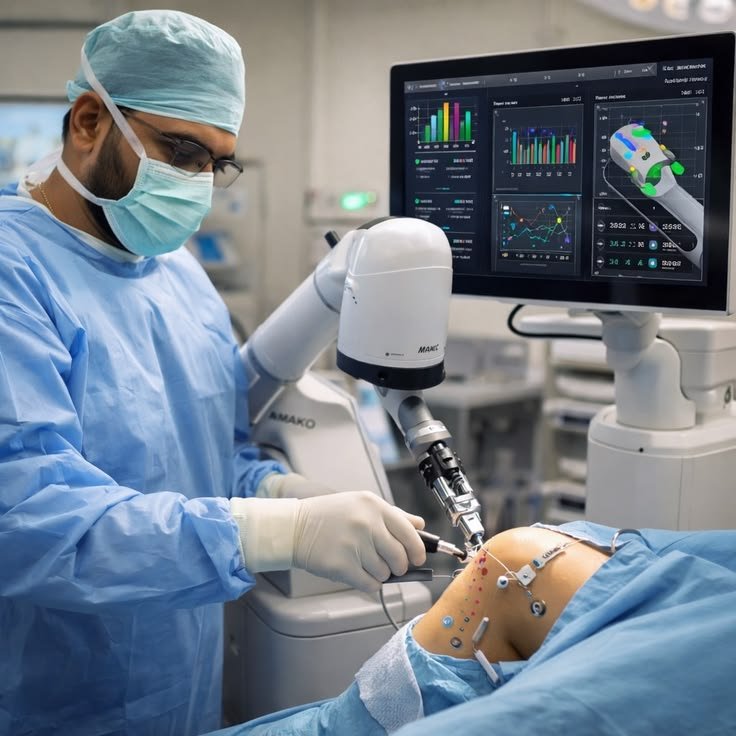
Some centres also offer robotic-assisted knee replacement for selected patients. However, robotic assistance is a surgical technology rather than a separate type of knee replacement. The surgeon still determines the treatment plan and performs the procedure.
Most importantly, the surgeon should select the technique based on the patient’s anatomy, joint condition, medical requirements, and expected functional goals rather than using one approach for everyone.
Benefits Of Knee Replacement Surgery
For appropriately selected patients with advanced knee joint damage, replacement surgery can provide meaningful improvements in pain and function.
Potential benefits include:
- Reduction in severe knee pain
- Improved walking ability
- Better knee function
- Greater independence during daily activities
- Improved ability to climb stairs
- Improved sleep when pain previously disrupted rest
- Increased ability to participate in suitable physical activities
- Improved overall quality of life
However, outcomes vary between individuals. Recovery depends on factors such as general health, muscle strength, rehabilitation, activity level, and the condition of the knee before surgery.
Therefore, patients should maintain realistic expectations and follow their surgeon’s rehabilitation programme.
Recovery After Knee Replacement Surgery
Recovery starts soon after the operation. The medical and physiotherapy teams guide the patient through progressive stages of rehabilitation.
Early recovery may include:
- Pain management
- Wound care
- Gentle knee movement
- Early mobilization
- Walking with appropriate support
- Physiotherapy
- Muscle-strengthening exercises
As recovery progresses, patients gradually increase their walking distance and functional activities.
The recovery timeline differs from person to person. Some patients regain function quickly, while others need additional time and rehabilitation.
For this reason, patients should focus on steady progress rather than comparing their recovery with someone else’s experience.
Physiotherapy After Knee Replacement
Physiotherapy plays an important role in successful knee replacement rehabilitation. After surgery, the knee needs progressive movement and strengthening to regain functional capacity.
A rehabilitation programme may include:
- Range-of-motion exercises
- Quadriceps strengthening
- Hamstring strengthening
- Balance training
- Walking exercises
- Functional movement training
- Gradual activity progression
Initially, exercises may focus on restoring safe movement. Later, the programme can progress toward strength, balance, and everyday activities.
Furthermore, regular rehabilitation can help patients build confidence as they gradually return to normal movement.
Walking After Knee Replacement Surgery
Walking is an important part of rehabilitation. Many patients begin walking with assistance under the supervision of their medical or physiotherapy team.
Depending on their progress, patients may initially use:
- A walker
- Crutches
- Another recommended walking aid
As strength, balance, and confidence improve, the patient may gradually reduce dependence on walking support.
However, every patient progresses differently. Therefore, the treating team should guide the transition from assisted walking to independent walking.
Why Choose Dr. Amit Saoji Ortho Sports Care?
If you are searching for Knee Replacement Surgery in Adilabad, you should look for an orthopaedic practice that evaluates your condition carefully and explains the available treatment options.
Dr. Amit Saoji Ortho Sports Care provides orthopaedic evaluation and treatment for knee, shoulder, hip, and sports-related conditions.
Dr. Amit Saoji’s professional focus includes orthopaedics, arthroscopy, and sports injury care. His approach emphasizes understanding the patient’s symptoms and functional needs before developing an appropriate treatment plan.
Patients may receive guidance regarding both conservative and surgical options depending on their diagnosis.
This individualized approach helps patients understand why a particular treatment has been recommended and what they can expect during rehabilitation.
Knee Replacement Surgery In Adilabad – Get The Right Evaluation
Persistent knee pain can gradually reduce independence and limit the activities you enjoy. You do not have to assume that severe knee pain is simply a normal part of ageing.
If pain continues despite appropriate non-surgical treatment, an orthopaedic evaluation can help identify the cause and determine the next step.
If you are searching for Knee Replacement Surgery in Adilabad, knee replacement surgeon in Adilabad, total knee replacement in Adilabad, partial knee replacement in Adilabad, or knee arthritis treatment in Adilabad, consult Dr. Amit Saoji Ortho Sports Care for an individualized assessment.
The appropriate treatment depends on your diagnosis, joint damage, symptoms, general health, and functional goals.
Frequently Asked Questions About Knee Replacement Surgery In Adilabad
Patients with advanced knee joint damage, persistent pain, significant functional limitations, and inadequate improvement from appropriate non-surgical treatment may be considered for knee replacement.
Some discomfort is expected after surgery. However, the medical team uses appropriate pain-management strategies to help control post-operative discomfort.
Recovery varies according to the patient’s health, age, muscle strength, surgical procedure, rehabilitation, and individual healing.
Patients generally improve gradually rather than all at once. Therefore, following the rehabilitation plan is important.
Many patients begin mobilization relatively soon after surgery under professional supervision. The medical team determines the appropriate level of walking support according to the patient’s condition.
Physiotherapy forms an important part of rehabilitation for most patients. It helps restore knee movement, muscle strength, balance, and walking function.
Knee replacement replaces damaged joint surfaces and aims to relieve pain caused by severe joint damage. However, it does not cure arthritis that may affect other joints or the underlying cause of inflammatory arthritis.
Appropriate physical activity can form an important part of long-term health after recovery. Low-impact activities are often more suitable than high-impact activities, but your surgeon should guide you according to your individual situation.
Consider an orthopaedic consultation if knee pain, stiffness, swelling, or reduced mobility interferes with walking, sleeping, working, exercising, or other everyday activities.
Consult Dr. Amit Saoji For Knee Replacement Evaluation
Severe knee pain can affect your mobility, independence, and quality of life. Fortunately, modern orthopaedic treatment offers several options depending on the cause and severity of the problem.
If conservative treatment no longer provides sufficient relief and advanced knee damage significantly limits your daily activities, Knee Replacement Surgery in Adilabad may be worth discussing with an orthopaedic specialist.
Dr. Amit Saoji
Orthopaedic, Arthroscopy & Sports Injury Surgeon
Focus on Knee, Shoulder & Hip Conditions
This page provides general educational information and does not replace an individual medical consultation. Knee replacement should be recommended only after appropriate clinical examination and evaluation.